Rocky Mountains by campervan: 4 unforgettable road trip routes
 Julia
JuliaUpdated at: 10/07/2026
Reading time: 11 minutes
Snow-capped peaks, turquoise lakes, deep canyons and some of North America's best national parks: the Rocky Mountains are made for a campervan adventure. But with the Rockies stretching for thousands of kilometres through Canada and the USA, where should you actually go? We've picked four very different routes – from a national park in the Rocky Mountains in Colorado to Glacier National Park in Montana and the Icefields Parkway in Canada.
Whether you're planning three weeks on the road or adding a short mountain adventure to a longer North American trip, these routes are a great starting point for holidays to the Rocky Mountains.
And of course, you don't have to follow them exactly. That's the beauty of travelling by campervan: combine them, shorten them or stay an extra night whenever you find somewhere you don't want to leave.
First things first: where are the Rocky Mountains?
The Rocky Mountains form one of North America's great mountain ranges, stretching for around 4,800 kilometres from western Canada towards the south-western United States.
In the USA, the Rockies run through states including Montana, Wyoming, Colorado and New Mexico. Across the border in Canada, they continue through British Columbia and Alberta.
The result is an enormous variety of landscapes. Depending on your route, you could be hiking between alpine lakes one day, watching geysers erupt the next and driving past glaciers a few days later.
Hiring a campervan for the Rocky Mountains
If you're travelling from the UK, the easiest option is usually to fly to a major city and collect your campervan there.
For the US routes below, Denver makes a particularly convenient starting point, while Calgary is ideal for exploring the Canadian Rockies. One-way rentals may also be possible on some routes, depending on the rental company and vehicle availability.
Before booking, check your campervan's dimensions as well as the rental company's driving restrictions. This is particularly important in national parks, where some mountain roads have strict vehicle-size limits.
1. Colorado: mountains, sand dunes and canyons
 Start/Finish
Denver
 Distance & Duration
Approx. 1,500 km; around 3 weeks
 Best Time
Late spring to early autumn
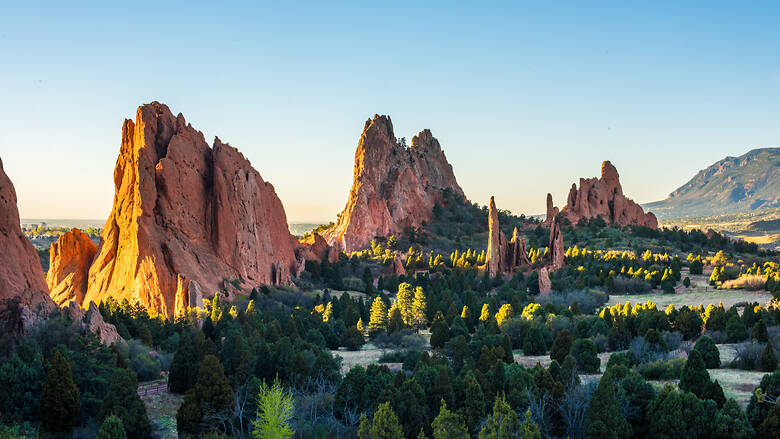
Colorado is a great introduction to the American Rockies. The mountain range dominates much of the state, but this route also takes you to enormous sand dunes, deep canyons and archaeological sites.
Rocky Mountain National Park
Start in Denver and head towards Rocky Mountain National Park, one of the most famous examples of a national park in the Rocky Mountains.
More than 480 kilometres of hiking trails cross the park, taking you through wildflower meadows, forests and past clear mountain lakes. There are walks for almost every ability level, from relatively gentle trails to challenging mountain routes.
If you're looking for something accessible, head towards destinations such as Calypso Cascades. More experienced hikers can consider routes around Twin Sisters Peaks.
Longs Peak is a different proposition altogether. At over 4,300 metres, reaching the summit is a serious mountain undertaking rather than an ordinary day hike. Only attempt it if you have the necessary experience, fitness, equipment and suitable conditions.
Wildlife is another reason to visit. Elk are frequently spotted in the park, alongside mule deer, bighorn sheep and plenty of smaller mountain wildlife.
Rocky Mountains camping in the national park
If Rocky Mountains camping is part of your road trip, staying inside the park puts you right in the middle of the scenery.
Rocky Mountain National Park has several established campgrounds. In summer, reservations are required for Moraine Park, Glacier Basin, Aspenglen and Timber Creek. Motorhome length limits vary by campground, so check that your vehicle fits before booking.
Glacier Basin is particularly convenient for exploring the eastern side of the park, while Moraine Park is another popular option.
From the Rockies to the Great Sand Dunes
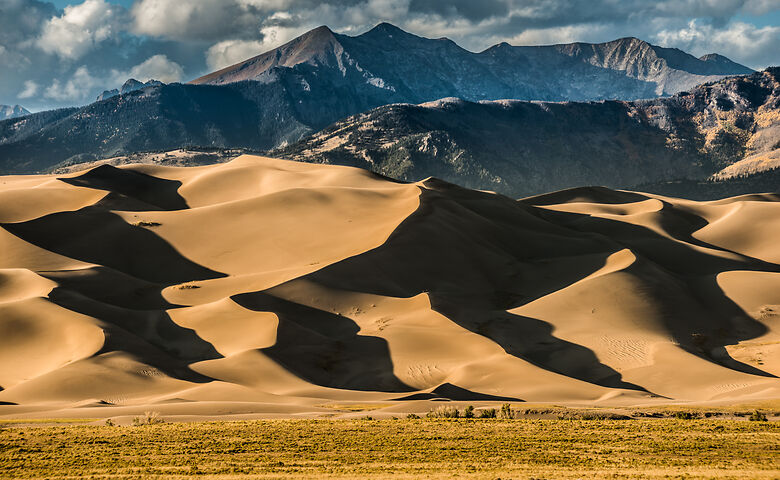
Continue south from Denver and the landscape changes dramatically.
At Royal Gorge, you can look down into the canyon from the famous suspension bridge – or get much closer to the Arkansas River on a white-water rafting trip.
Pikes Peak is another Colorado icon. The mountain rises to more than 4,300 metres, and the scenic highway takes you almost all the way to the summit. Check vehicle restrictions and weather conditions before driving up, particularly if you're travelling in a larger motorhome.
Then there are two destinations that technically lie outside the Rocky Mountains but are well worth adding to your Colorado itinerary.
At Great Sand Dunes National Park and Preserve, towering dunes rise against a backdrop of mountains. The contrast is striking – one minute you're on a classic Rocky Mountains road trip, the next it feels as though you've arrived in a desert.
Further west, Mesa Verde National Park protects remarkable Ancestral Puebloan archaeological sites, including centuries-old cliff dwellings.
2. Denver to Portland: glaciers, geysers and grizzlies
- Start/Finish
Denver to Portland - or vice versa
- Distance & Duration
Approx. 2,800 km, 3–4 weeks
- Best Time
Summer to early autumn
If your idea of holidays to the Rocky Mountains involves seeing as much wildlife and wilderness as possible, this route should be high on your list.
Start in Denver and spend some time in Rocky Mountain National Park before heading west along the I-70.
The mountains around Breckenridge are popular for hiking and mountain biking in summer, while Steamboat Springs is another great outdoor stop before you cross into Wyoming.
Next comes Lander, a laid-back town on the edge of the Rockies that's particularly popular with climbers. There are several camping options in the surrounding area, making it a good place to slow down before continuing north.
Grand Teton and Yellowstone National Parks
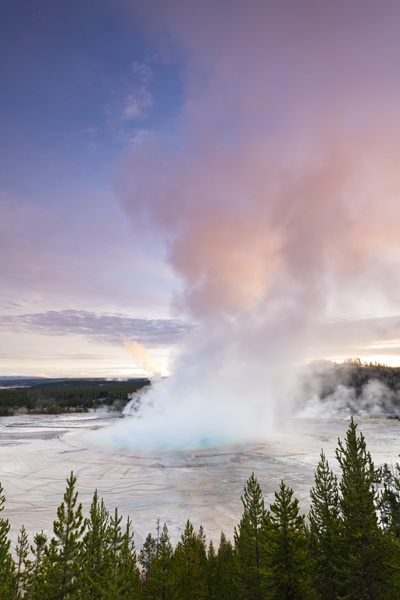
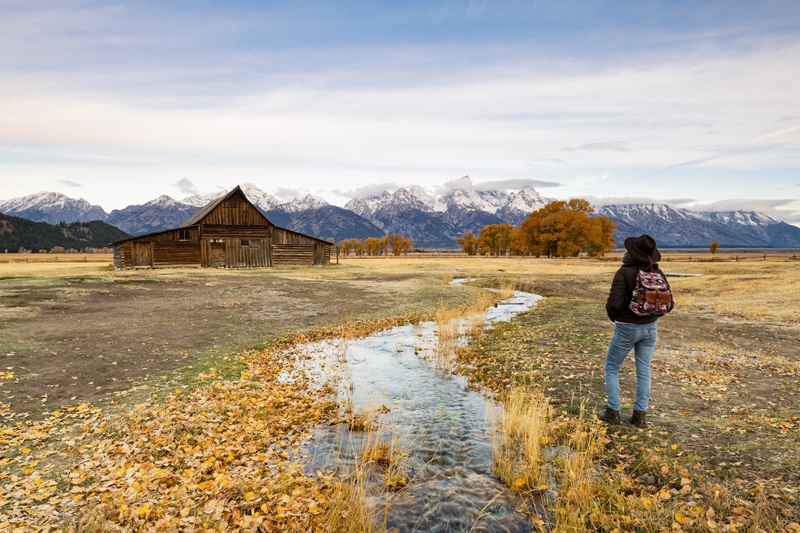
Grand Teton National Park is your next major stop. Jagged mountain peaks rise almost directly from the valley floor, with lakes and hiking trails below.
From there, continue into Yellowstone – one of the largest and most varied national parks in the USA.
Give yourself at least three days here. Yellowstone is enormous, and trying to see its geysers, waterfalls, wildlife and lakes in a single day means spending far too much time behind the wheel.
Old Faithful is the famous headline act, but don't stop there. Yellowstone is also home to colourful hot springs, the Grand Canyon of the Yellowstone, vast valleys and wildlife including bison, elk, bears and wolves.
Camping in Yellowstone
From Yellowstone, continue north into Montana before gradually turning west towards Oregon.
If you've still got energy left, stop around Hells Canyon on the Idaho–Oregon border. The Snake River cuts through this enormous landscape, and rafting is one of the best ways to experience it.
Finally, your road trip ends in Portland. After nearly 2,800 kilometres, you've definitely earned a proper bed – although by then you might prefer the campervan.
3. Going-to-the-Sun Road through Glacier National Park
- Start/Finish:
West Glacier, Montana - St Mary, Montana
- Distance & Duration
Approx. 80 km; Around 2 hours without stops – allow most of the day
- Best Time
Summer to early autumn, depending on road conditions
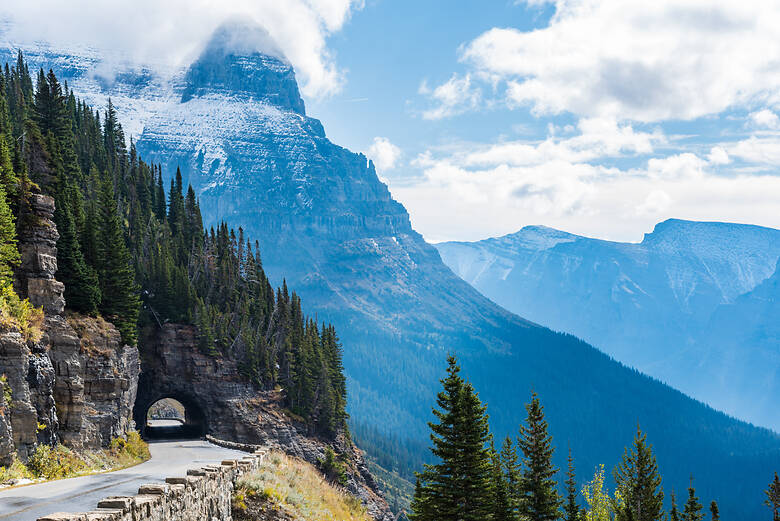
Short in distance but huge in scenery, Going-to-the-Sun Road is one of the most famous mountain drives in North America.
The road crosses Glacier National Park from west to east, climbing from forests and lakes towards the Continental Divide at Logan Pass before descending towards St. Mary.
Although the drive itself is only around 80 kilometres, don't rush it. You'll want plenty of time for viewpoints and walks.
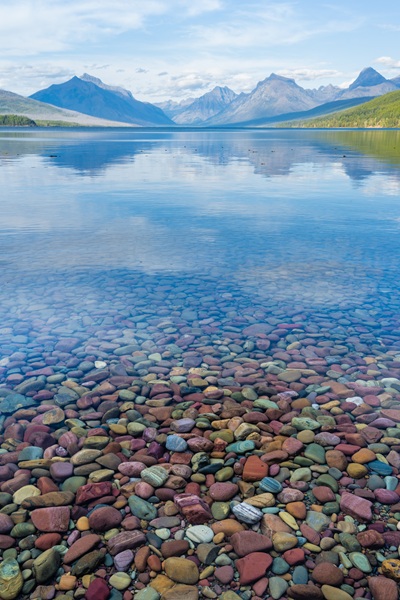
Start at West Glacier and continue towards Apgar and Lake McDonald, the largest lake in the park. Mountains rise behind the clear water, making this one of those places where a five-minute photo stop can easily turn into half an hour.
At Avalanche, leave the campervan behind and walk the Trail of the Cedars. If you want something longer, continue towards Avalanche Lake, surrounded by steep mountain walls and waterfalls.
The road then climbs through increasingly dramatic scenery towards Logan Pass, the highest point on Going-to-the-Sun Road. Hiking trails start here, with views across much of Glacier National Park below.
Continue east towards St. Mary, stopping for another walk around St. Mary Falls if you have time.
Important: can you drive Going-to-the-Sun Road in a campervan?
Not every campervan or motorhome is allowed on the full Going-to-the-Sun Road.
Between Avalanche Creek and Rising Sun, vehicles and vehicle combinations longer than 6.4 m (21 ft) or wider than 2.4 m (8 ft), including mirrors, are prohibited. Vehicles over 3 m (10 ft) high can also have difficulty with rock overhangs on part of the route.
So before building your itinerary around this road, check the exact dimensions of your rental campervan.
If your motorhome is too large, that doesn't mean you have to miss Logan Pass. Glacier National Park operates a shuttle system, so you can leave your vehicle elsewhere and explore without driving the restricted section yourself.
The road is also highly seasonal. Snow determines when the complete route opens each year; in 2026, the full road opened on 22 June. The alpine section normally closes again in autumn, depending on weather conditions.
And don't stop exploring after Going-to-the-Sun Road. Glacier has plenty more to offer:
Many Glacier: one of the best areas for hiking, with lakes, mountain scenery and a good chance of spotting wildlife.
Flathead Lake: a beautiful place to slow down for a few days, with camping opportunities around the lake.
Bob Marshall Wilderness Complex: an enormous wilderness area south of Glacier National Park with thousands of kilometres of trails.
4. Icefields Parkway: through the Canadian Rockies
- Start/Finish
Lake Louise - Jasper Town
- Distance & Duration
Approx. 230 km; At least 2–3 days
- Best Time
June to September for a classic summer road trip
For our final route, we're crossing the border into Canada.
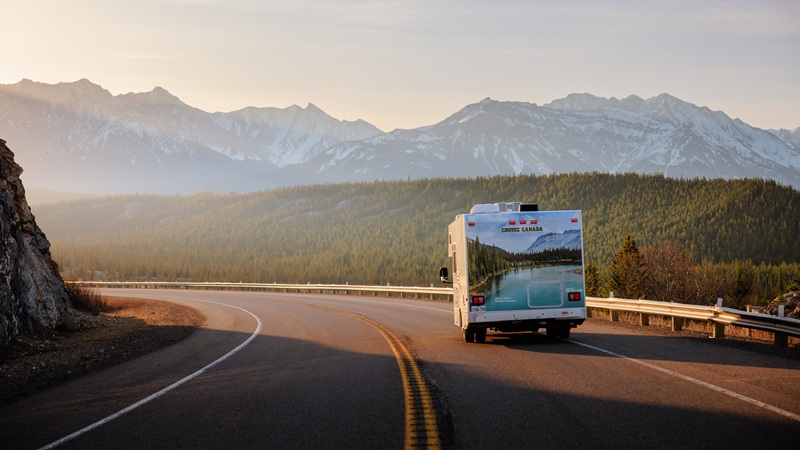
The Icefields Parkway connects Lake Louise with Jasper through the heart of the Canadian Rockies. At only around 230 kilometres, it might not sound particularly long – but this isn't a road you want to rush.
Glaciers, waterfalls, turquoise lakes and mountain viewpoints appear one after another.
If you're travelling from the UK, Calgary is a convenient place to fly into and pick up a campervan before heading towards the mountains.
Start around Lake Louise before joining Highway 93 north.
Peyto Lake and the Columbia Icefield
One of the first essential stops is Peyto Lake, famous for its intense turquoise colour. A short walk takes you to a viewpoint above the lake, where you can see its unusual shape surrounded by mountains.
Continue north and you'll eventually reach the Columbia Icefield, one of the largest accumulations of ice south of the Arctic Circle in Canada.
The Athabasca Glacier flows down towards the Icefields Parkway and is one of the most accessible glaciers in the region.
CamperDays tip: don't walk onto a glacier independently unless you're in an area specifically designated as safe. Glaciers contain hidden crevasses and other hazards, so use marked viewpoints or join an authorised guided experience.
Athabasca Falls and Jasper
Further north, stop at Athabasca Falls before continuing towards Jasper.
The waterfall isn't particularly high, but the enormous volume of water forced through the narrow gorge makes it one of the most impressive stops along the route.
Jasper itself is surrounded by mountains, lakes and wildlife. Spend a few days here if your itinerary allows rather than immediately turning around.
Camping along the Icefields Parkway
There are several campsites along and near the Icefields Parkway, ranging from more developed sites to relatively simple campgrounds surrounded by forest.
Summer is extremely popular, so plan your Rocky Mountains camping stops before you arrive – particularly if you're travelling in July or August.
Planning holidays to the Rocky Mountains from the UK
For UK travellers, the first decision is whether you want to explore the American Rockies, Canadian Rockies or both.
For Colorado and Yellowstone, Denver is one of the most convenient gateways. Calgary works particularly well for Banff, Lake Louise and the Icefields Parkway, while routes through Montana and Glacier National Park may require a little more planning.
Don't underestimate the distances. North American road trips can look deceptively manageable on a map, but adding several national parks can quickly mean thousands of kilometres behind the wheel.
If you have two weeks, focus on one region. With three or four weeks, you can create a much more extensive Rocky Mountains itinerary.
Which Rocky Mountains road trip should you choose?
That depends on what you want from your trip.
Choose Colorado if you want a varied first road trip with mountains, hiking, canyons and unusual landscapes such as the Great Sand Dunes. The Denver-to-Portland route is best if Yellowstone, Grand Teton and wildlife are your priorities.
For dramatic mountain driving, it's difficult to beat Going-to-the-Sun Road – provided your campervan meets the vehicle restrictions. And if turquoise lakes and glaciers are what you've been dreaming about, head to Canada for the Icefields Parkway.
Whichever route you choose, travelling by campervan means your Rocky Mountains camping experience becomes as memorable as the national parks themselves. Instead of simply driving through the scenery, you get to wake up right in the middle of it.

Do you have any feedback on the article, questions about booking a motorhome, or are you looking for tips? Then feel free to write to us here. We will get back to you as soon as possible.